Chiropractic & supportive care
Care built around how you move.
At Chi Rho Tribe, care begins with listening. Dr. John pairs a detailed functional assessment with hands-on chiropractic care and practical support shaped around your body, your goals, and your comfort.
Start with the whole picture
An exam with a reason behind it.
Your first visit is designed to understand what brought you in—not to rush you into a treatment plan. Dr. John considers your health history, movement, posture, joint function, and goals before making recommendations.
- 01 A focused conversation about what has changed and what matters to you
- 02 A physical and functional exam tailored to your concerns
- 03 Imaging only when the history and examination indicate it may be useful
Core services
Care that meets you where you are.
The approach can change as you do. Technique, intensity, and frequency should reflect your health history, response, preferences, and goals.
01Chiropractic adjustments
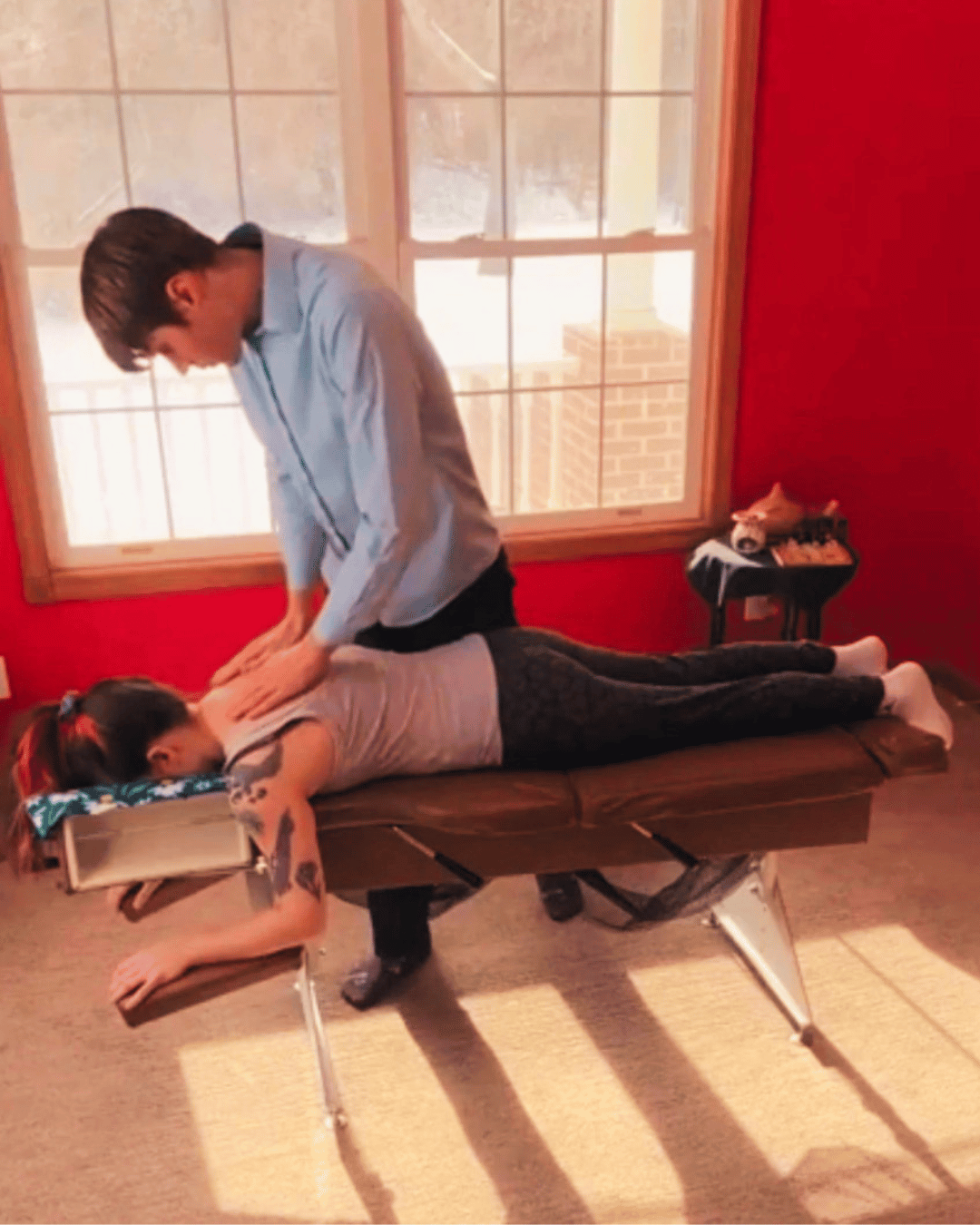
Specific, controlled hands-on care intended to improve joint motion and function. Dr. John can use a range of approaches—from gentler, lower-force techniques to manual adjustments—and should explain what he recommends before care begins.
Technique adapted to the individualMovement & corrective exercise
Simple, targeted movement can help you build capacity between visits. Recommendations may address mobility, strength, coordination, posture, or a movement pattern connected to your goals.
Practical support beyond the tableSoft-tissue support
When appropriate, hands-on soft-tissue work may be used alongside chiropractic care to address areas of tension and help you move more comfortably. The method should match both the exam and your preferences.
Used selectively—not automaticallyInjury-focused rehabilitation
After an injury, care may combine joint-focused treatment with progressive movement and at-home guidance. If your condition needs imaging, medical evaluation, or another type of clinician, Dr. John should help direct that next step.
Collaborative, scope-aware care
Supportive options
More tools, used thoughtfully.
Some visits may include supportive therapies or practical coaching. These are considered in context and are not a substitute for appropriate medical care.
MovementMobility, stretching & home guidance
Clear exercises and movement ideas you can carry into daily life, selected for your current ability and goals.
Ergonomic & lifestyle conversations
Practical ways to think about work setup, recovery, activity, stress, and routines that may influence how you feel and function.
General wellness guidance
Support for making informed nutrition and wellness choices within the practice’s scope, with referral to the appropriate professional when your needs are more specialized.
PEMF, red light, heat & cold
Optional supportive modalities may be discussed when relevant to your plan. Ask what a therapy is intended to do, what the evidence and limitations are, and whether it is appropriate for you.
A helpful question to ask: “How will we know whether this is helping?” A care plan should include a clear reason for each recommendation and a way to reassess it.
Your new-patient exam
Five steps. No guesswork.
Here is how the current new-patient process is designed to move from questions to an informed plan.
Consultation
Talk with Dr. John about what led you here, your health history, what you hope to change, and whether chiropractic evaluation fits your goals.
Posture & movement review
Video-assisted observation may be used to look at posture, walking, and movement patterns. These observations are considered alongside—not instead of—the rest of the examination.
Physical & spinal exam
Dr. John evaluates relevant joint motion, function, and other findings based on your concerns. He should explain what he is checking as the exam progresses.
Imaging, if indicated
Not everyone needs X-rays. If imaging could change the clinical decision or is needed to assess a concern, Dr. John will explain why before moving forward.
Report of findings
At the follow-up, you review the assessment, ask questions, discuss options and costs, and decide together what—if anything—comes next. Care begins only with your informed consent.
Not sure where you fit?
Start with a conversation.
You do not need to choose a service before you arrive. Tell the team what you are experiencing, and they can help you decide whether a visit with Dr. John is a sensible next step.
Begin with clarity
A thoughtful first step toward moving forward.
Come with your questions, your goals, and the honest story of what has been getting in your way.
Book your first visit →